One-plantAnimal
Foodspace (2024)
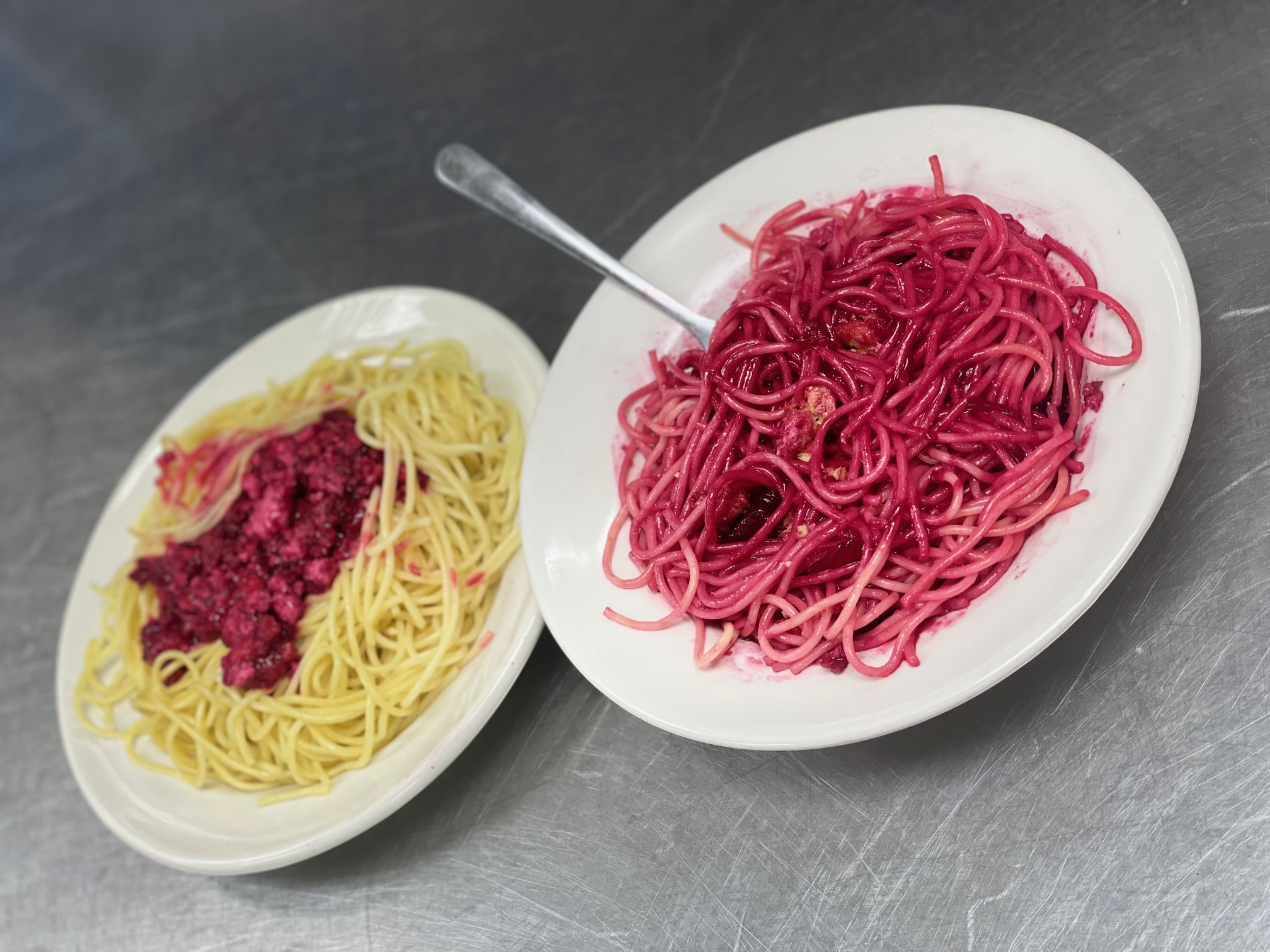
Figure 1. Example plates. Left: “addition by little s.” Right: “multiplication by little s.”
[Dream transcription 11/10/23]
The culinary world, especially in academia and to a lesser extent in industry, had adopted a systematic method for describing food known as "foodspace".
I was a student sitting in a large carpeted lecture hall for an introductory foodspace course.
The lecturer was drearily expositing on sauces, explaining how they were representable "either by addition or multiplication by little s in foodspace."
My attention turns to two plates on a desk at the front of the hall, each made from long cylindrical pasta, an alarmingly pink translucent sauce comparable in texture to Chinese starch sauce, and tiny browned meat bits which I knew had been torn manually from whole meat balls.
The first plate, which I knew demonstrated "addition by little s," had a dollop of meaty sauce on top, with the plain pasta still exposed underneath it.
The second plate, which showed "multiplication by little s," had a homogenous mixture of entirely coated pasta.
[End transcription]
At the time of the foodspace dream I was living in Harkness, a vegetarian housing and dining co-op at Oberlin College, where I also served as a head cook. This position entailed planning and overseeing the preparation of a weekly meal for the hundred-some-odd dining members, which put me in a highly conducive position for “following my dreams” so to speak. On the holy and boring day of Sunday I did just this, reproducing the food in the dream with a co-op friendly set of ingredients featuring a pink beet sauce and crumbly tofu (see figure 1). I then gave my best reenactment of the lecture, and took questions from the audience. It was great fun.
Reassuringly, many of the questions asked betrayed a certain indignance nearing on what I consider to be a source of the dream, namely the disgust at seeing an eminently qualitative field such as cooking subjected to vulgar false spatializing procedures. There was a particular enthusiasm for poking holes or testing the theory’s structural integrity, as if checking the progress of a cake with a suspiciously runny batter that one reckons won’t turn out at all. What happens to the notation once the pasta is digested? How about mixing which is neither homogenous nor heterogenous? How many substitutions might be made to a dish before it becomes a different dish?
Continuing to play the part of the Bergsonian villain, I would intimate at this or that sophistication of foodspace beyond my area of expertise, redirecting the curious students to consult with the appropriate specialized colleagues and thus frustrating attempts to unmask the spectral foundations of the theory. “Spectral” I mean in the sense of the empty spiritual qualities stemming from the fact that any impromptu extensions of foodspace notation beyond the dream obscured an obviously nonexistent basis, but also in the sense of the scientific spectrum as a representative of extension, or the process by which we “appropriate foreign elements” and “simplify the manifold” which Nietzsche calls the will’s “digestive power” (Beyond Good & Evil 230). “And in fact,” he says, stomach grumbling, “‘the spirit’ resembles a stomach more than anything else.“ This gives us another explanation for why the image of cooking as natural science is so upsetting: food that has already been digested is generally considered unappetizing. (Gross!)
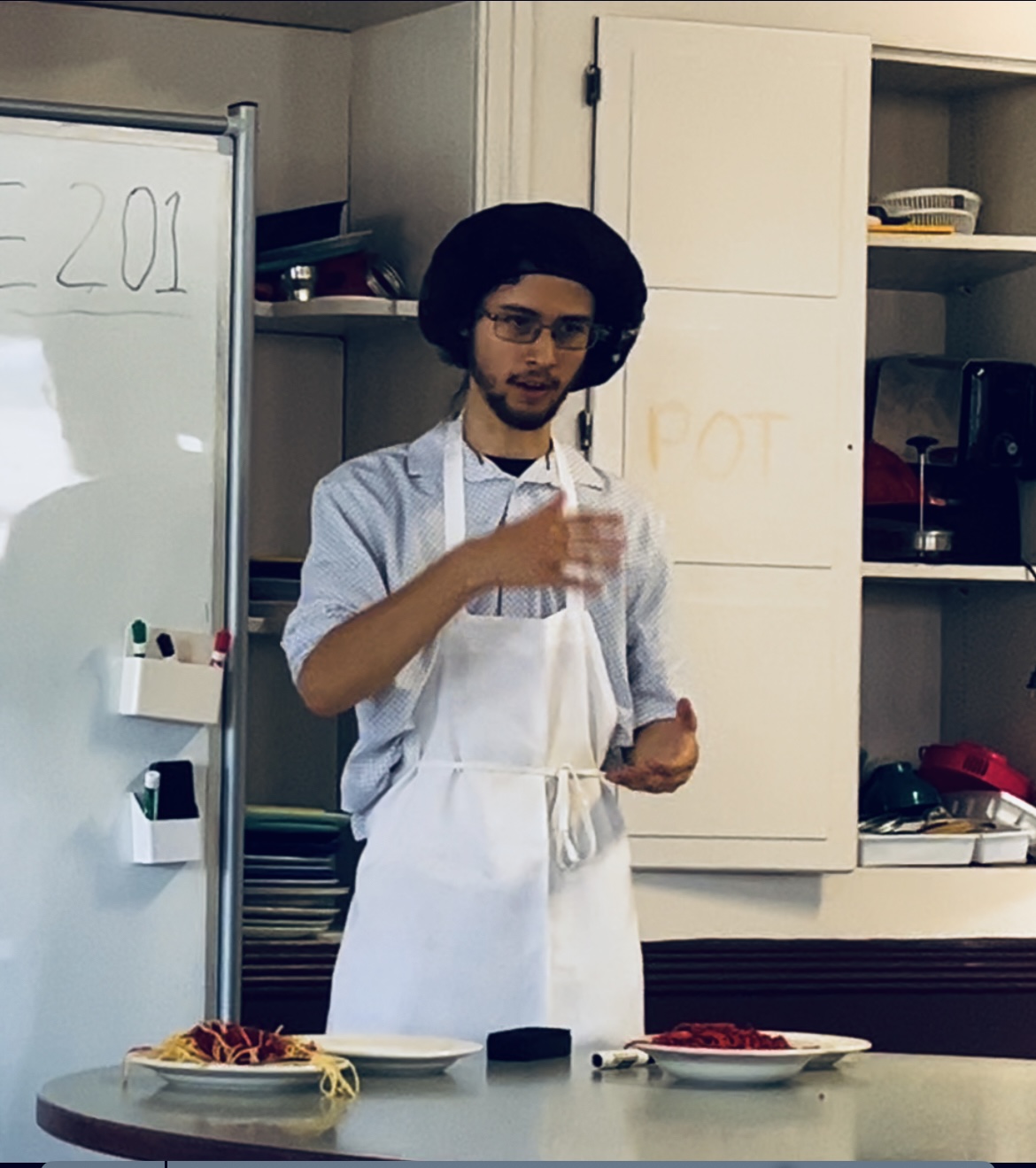
Figure 2. Lecturing.